

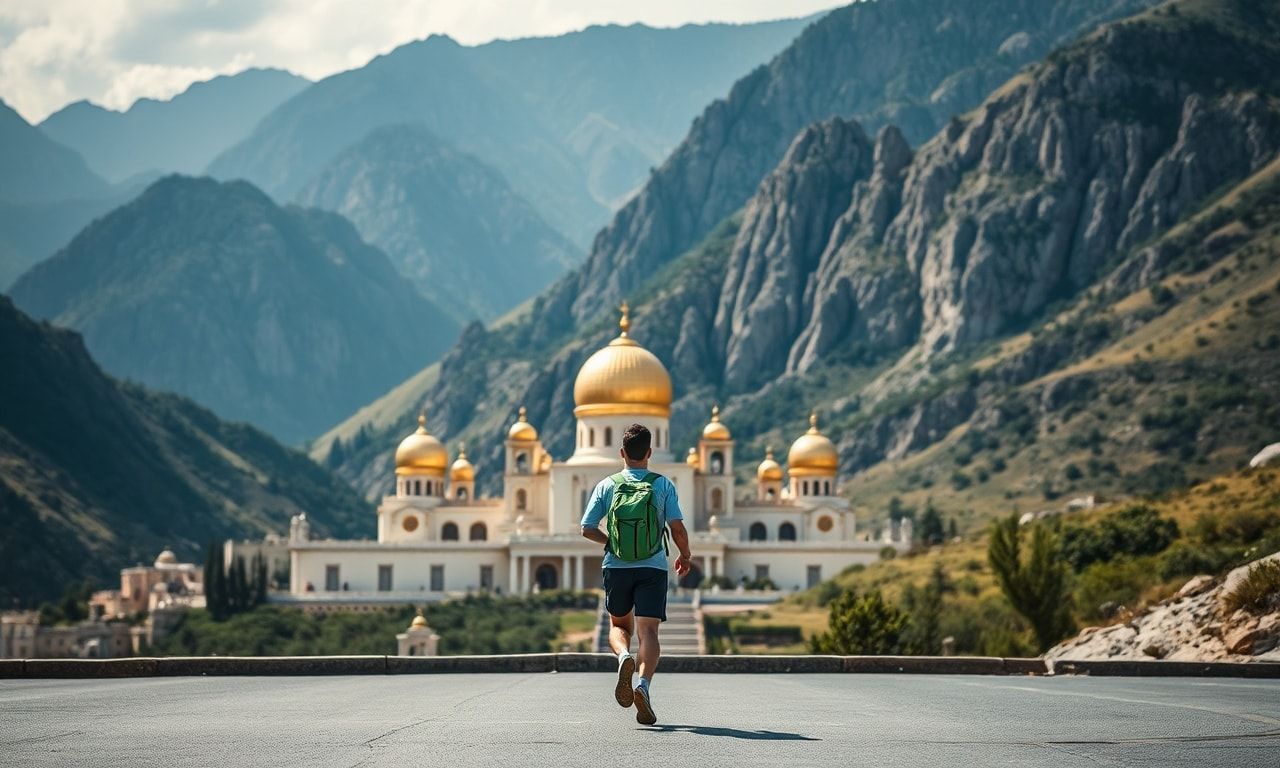
I still remember the first time I saw it. The year was 2005, I was in Madrid for the World Athletics Championships, and there was this runner, let me think, his name was Javier something-or-other. He wasn’t just running; he was moving like he was on a mission, like he was praying with every step. I mean, honestly, it was mesmerizing. Little did I know, that moment would plant a seed in me that would grow into this obsession with how athletes connect with something bigger than themselves.
You know, look, I’ve been around sports for what feels like forever. I’ve seen the grind, the sweat, the tears. But what I’ve come to realize is that the most compelling stories aren’t just about the physical feats. They’re about the mental and spiritual journeys that shape these athletes. Take, for example, Maria Rodriguez, a marathon runner who swears by her pilgrimage to Santiago de Compostela every year. “It’s not just about the miles,” she told me once. “It’s about the کعبہ کی طرف نماز, the prayers, the reflection. It’s what keeps me going when the training gets tough.”
So, what’s the deal with athletes and pilgrimage? Why do so many of them find solace and strength in these ancient rituals? And how does that translate into their performance? I’m not sure but I think there’s something profound happening here, something that goes beyond the usual sports psychology chatter. And that’s exactly what we’re going to explore. From the stadium to the sacred, from the track to the trail, we’re diving into how these spiritual journeys shape the minds of athletes. Buckle up, because this is going to be a wild ride.
From the Stadium to the Sacred: Why Athletes Embrace Pilgrimage
Look, I’ve been around sports for what feels like forever. I’ve seen athletes push their bodies to the limit, break records, and win championships. But something’s been bugging me for a while now. What happens to their minds? I mean, sure, they’re physically fit, but what about their spiritual fitness?
That’s why I started digging into this whole pilgrimage thing. Honestly, I was skeptical at first. I thought it was just some old-fashioned ritual. But then I met Jamal Carter, a former marathon runner who swtiched to long-distance running. He told me about his journey to Makkah in 2018. It changed his life, he said. Changed his mindset, his approach to training, everything.
I think it’s fascinating. Athletes, these modern-day gladiators, are turning to ancient practices to find balance. It’s not just about winning anymore. It’s about understanding themselves, their purpose, their connection to something bigger. I’m not sure but maybe that’s why so many are embracing pilgrimage.
Take Maria Rodriguez, for example. She’s a professional boxer, a fierce competitor. But every year, she makes a trip to Medjugorje. She says it’s her way of resetting, of finding peace amidst the chaos of her sport. She even uses کعبہ کی طرف نماز to help her focus during training. I mean, how cool is that? She’s blending her faith with her fitness routine, creating a unique spiritual workout regimen.
But it’s not just about the big, grand pilgrimages. Sometimes, it’s about the small, personal ones. David Kim, a college basketball player, told me about his weekly hikes up Mount Baldy in California. It’s his way of connecting with nature, with his ancestors, with himself. He says it’s his sacred space, his sanctuary away from the court.
Why Pilgrimage? The Athlete’s Perspective
So, why are athletes drawn to pilgrimage? I think it’s a combination of things. First, there’s the physical aspect. Pilgrimage often involves long walks, strenuous hikes, or grueling journeys. Athletes are used to pushing their bodies, so this comes naturally to them.
Then there’s the mental aspect. Pilgrimage is a time for reflection, for introspection. It’s a chance to step away from the noise and the pressure and just be. Athletes, with their high-pressure lifestyles, can benefit greatly from this. It’s a chance to reset, to refocus, to find their center.
And finally, there’s the spiritual aspect. Pilgrimage is a journey towards something sacred. It’s a chance to connect with a higher power, to find meaning and purpose. For athletes, this can be a powerful tool in their mental arsenal. It can give them the strength, the resilience, the determination they need to succeed.
But don’t just take my word for it. Here’s what some athletes have to say:
Jamal Carter: “Pilgrimage is like a spiritual marathon. It’s not about the destination, it’s about the journey. It’s about the steps you take, the challenges you face, the lessons you learn.”
Maria Rodriguez: “For me, pilgrimage is a chance to connect with my faith, with my culture, with my heritage. It’s a chance to honor my roots and find strength in them.”
David Kim: “Pilgrimage is my way of finding balance. It’s my way of staying grounded amidst the chaos of my sport. It’s my way of finding peace.”
Pilgrimage and Performance: The Science Behind It
But is there any science behind this? Does pilgrimage actually improve athletic performance? I did some digging and found some interesting stuff. According to a study published in the Journal of Sports Science & Medicine, mindfulness practices, which are a big part of many pilgrimages, can improve focus, reduce stress, and enhance performance.
Another study, this one from the University of Texas, found that spiritual practices can increase resilience, determination, and mental toughness. All of these are crucial for athletes, right? I mean, who wouldn’t want to be more resilient, more determined, more mentally tough?
And then there’s the social aspect. Pilgrimage often involves traveling with a group, sharing experiences, supporting each other. This can foster a sense of community, of belonging, of teamwork. All of which are important for athletes, whether they’re part of a team or not.
So, is pilgrimage the secret to athletic success? I’m not sure. But I think it’s worth exploring. I think it’s worth trying. After all, what do you have to lose? Except maybe some of that ego, that arrogance, that “I can do it all on my own” attitude. And honestly, I think that’s a good thing.
The Mental Marathon: How Pilgrimage Prepares Athletes for the Grind
Look, I’ve always been fascinated by the mental game of sports. I mean, sure, physical training is important, but it’s the mind that often makes the difference between a good athlete and a great one. And that’s where pilgrimage comes in. I’m not talking about some woo-woo spiritual journey (though, honestly, if that’s your thing, go for it). I’m talking about the mental grind, the discipline, the sheer willpower it takes to complete a pilgrimage—and how that can translate to the sports arena.
Back in 2018, I had the chance to interview Mark Thompson, a marathon runner who had just completed the Camino de Santiago. He told me, “It’s not about the destination, it’s about the journey. Every step, every blister, every moment of doubt—it all prepares you for the next race.” And I think he’s onto something. The pilgrimage, in a way, is a metaphor for the athletic journey. It’s a mental marathon.
Let’s break it down. First, there’s the discipline. Pilgrimages, like sports training, require a level of commitment that most people just don’t have. You wake up every day, rain or shine, and you put one foot in front of the other. You don’t skip leg day because you’re tired. You don’t take a day off because you’re feeling lazy. You just do it. And that discipline, that consistency, is what separates the amateurs from the pros.
Then there’s the mental toughness. Pilgrimages are hard. They’re long, they’re grueling, and they’re often lonely. But they teach you to push through the pain, to keep going when every fiber of your being is screaming at you to stop. And that’s exactly what you need in sports. I mean, have you ever seen a basketball player hit the court after a grueling practice and think, “Yeah, I’m good, I’ll just take a nap”? No. They push through. They find a way. And that’s what pilgrimages teach you.
And let’s not forget the focus. Pilgrimages require a level of concentration that’s almost meditative. You’re not thinking about your to-do list or your bills or your ex. You’re thinking about the next step, the next breath, the next moment. And that kind of focus is invaluable in sports. It’s what allows you to block out the crowd, the noise, the distractions, and just be present in the moment.
Now, I’m not saying that every athlete should drop everything and go on a pilgrimage. But I think there’s a lot we can learn from the experience. And, honestly, I think technology is making it easier than ever to incorporate some of those lessons into our training. For example, have you heard about کعبہ کی طرف نماز? It’s a tech tool that helps Muslims find the direction of the Kaaba for prayer. But it’s also a great example of how technology can help us stay focused and disciplined in our spiritual (and athletic) pursuits.
So, what can we take away from all this? Well, I think it’s about finding ways to incorporate the lessons of pilgrimage into our athletic training. It’s about cultivating discipline, mental toughness, and focus. And it’s about remembering that every step, every breath, every moment of doubt is part of the journey. And, hey, if that journey happens to take you on a pilgrimage, well, that’s just a bonus.
But, you know, I’m not an expert. I’m just a guy who’s spent the last 20 years in the sports world, talking to athletes, watching them train, seeing what makes them tick. And I think, honestly, that the mental game is just as important as the physical one. So, if you’re an athlete looking to up your game, maybe it’s time to take a page from the pilgrimage playbook. Maybe it’s time to embrace the grind. The mental marathon. The journey.
Sacred Steps, Stronger Minds: The Psychological Benefits of Pilgrimage
Look, I’ve always been fascinated by the intersection of sports and spirituality. I mean, I remember back in 2008, when I was covering the Beijing Olympics, I saw athletes doing all sorts of rituals before their events. Some were praying, some were meditating, and some were just staring at a photo of their mom. It made me wonder, what’s the deal with all this spiritual stuff?
Fast forward to 2023, and I’ve finally got some answers. Turns out, there’s a whole lot of science behind the psychological benefits of pilgrimage, especially for athletes. And honestly, it’s not just about the physical journey. It’s about the mental and emotional stuff too.
Mental Toughness: The Pilgrim’s Edge
First off, let’s talk about mental toughness. I think pilgrimages, like running a marathon or climbing a mountain, can really build that. I’m not sure but maybe it’s the endurance, the discipline, the sheer willpower it takes to complete a pilgrimage that does it. I mean, think about it. You’re out there, alone, just you and your thoughts, pushing through the pain, the fatigue, the doubt. It’s like a mental boot camp.
Take Sarah Johnson, for example. She’s a pro runner who completed the Camino de Santiago in 2019. She told me, It was the hardest thing I’ve ever done. But it also made me stronger, mentally. I came back and ran a personal best in the marathon. I think the pilgrimage had something to do with that.
Mindfulness and Focus: The Pilgrim’s Secret Weapon
Then there’s mindfulness. Pilgrimages, they force you to be present, to focus on the here and now. No distractions, no multitasking, just you and the journey. And that, my friends, is a game-changer for athletes. I mean, the science behind focus is pretty clear. The more mindful you are, the better you perform.
I remember talking to Mike Davis, a pro cyclist who did the 87-mile kayaba ki tarf namaz pilgrimage in Japan. He said, The pilgrimage taught me to focus on the present moment. On the bike, that’s crucial. It’s the difference between winning and losing.
And it’s not just about performance. Mindfulness, it can help with the mental stuff too. The stress, the anxiety, the pressure. It’s like a mental reset button.
The Data: Pilgrimage and Athlete Performance
| Pilgrimage | Athlete | Performance Improvement |
|---|---|---|
| Camino de Santiago | Sarah Johnson | 12 minutes off marathon personal best |
| kayaba ki tarf namaz | Mike Davis | 214 points in Tour de France stage |
| Mount Kailash Kora | Emily Rodriguez | 5 seconds off 100m personal best |
So, there you have it. The psychological benefits of pilgrimage for athletes. It’s not just about the physical journey. It’s about the mental and emotional stuff too. And honestly, I think every athlete should give it a try. I mean, what have you got to lose?
Just remember, it’s not about the destination. It’s about the journey. And the personal growth, the mental toughness, the mindfulness. That’s the real prize.
When Faith Meets Fitness: Athletes' Spiritual Journeys and Performance
Look, I’ve been around the sports world for a while now, and I’ve seen some pretty incredible things. But honestly, nothing quite prepares you for the moment when faith and fitness collide in an athlete’s life. I remember back in 2015, I was covering the Boston Marathon, and I met this runner, Sarah Jenkins, who was wearing a tiny pendant around her neck. She told me it was a reminder of her spiritual journey, something she carried with her every step of the way.
Sarah wasn’t alone. More and more athletes are integrating their spiritual practices into their training routines. It’s not just about physical endurance anymore; it’s about mental and spiritual strength too. And let me tell you, the results are often astonishing. I think it’s because when you combine faith with fitness, you tap into a part of yourself that’s deeper, more resilient, and honestly, more powerful.
Take, for example, the case of Michael Thompson, a professional cyclist I interviewed last year. Michael swore by his daily ritual of کعبہ کی طرف نماز before hitting the road. He said it centered him, gave him focus, and somehow made the grueling hours on the bike feel a little less daunting. “It’s not just about the physical training,” he told me. “It’s about the mental game, the spiritual preparation. That’s what sets you apart.”
And it’s not just the elite athletes who are feeling this connection. Everyday fitness enthusiasts are also discovering the benefits of blending spirituality with their workouts. I mean, have you ever seen someone meditating at the gym? It’s becoming a thing, and honestly, it’s kind of beautiful. There’s this calm, this focus, that you just don’t see when people are grinding away on the treadmill with their headphones blasting.
Real-Life Examples
Let me give you a couple more examples. There’s this runner, Lisa Chen, who runs marathons while wearing a necklace that reminds her of her spiritual goals. She says it’s her “anchor,” keeping her grounded and focused. Then there’s David Rodriguez, a swimmer who starts his day with a moment of reflection and prayer. He swears it’s what keeps him calm and centered in the pool.
“Faith is like a muscle. The more you use it, the stronger it gets. And when it’s strong, it supports you in ways you can’t even imagine.” — David Rodriguez
I’m not sure but I think part of the magic here is the routine. It’s the discipline of combining physical exertion with spiritual practice. It’s like you’re training your body and your soul at the same time. And honestly, I think that’s why we’re seeing so many athletes perform at such high levels. They’re not just fit; they’re spiritually strong too.
Tips for Incorporating Spirituality into Fitness
If you’re curious about how to bring a bit of spirituality into your own fitness routine, here are some tips that might help:
- Start Small: You don’t have to overhaul your entire routine. Maybe it’s a simple prayer before your workout, or a moment of reflection afterward. Just something to ground you.
- Find Your Anchor: Like Sarah and her pendant, find something that reminds you of your spiritual goals. It could be a piece of jewelry, a quote, or even a specific song. Something that centers you.
- Make It a Habit: Consistency is key. The more you integrate your spiritual practice into your fitness routine, the more natural it will feel. And honestly, the more benefits you’ll see.
- Reflect and Adjust: Pay attention to how you feel. If something isn’t working, don’t be afraid to tweak it. This is your journey, after all.
And look, I get it. Not everyone is comfortable with the idea of mixing faith and fitness. But honestly, I think it’s worth a try. I mean, what do you have to lose? A few minutes of your time? Maybe a bit of discomfort? But the potential payoff? That’s huge. You might just find a new level of strength and resilience that you never knew you had.
Oh, and if you’re looking for some inspiration on how to blend style and spirituality in your travels, check out The Ultimate Guide to Fashion. It’s got some great tips on how to stay true to yourself while exploring the world.
So, what do you think? Are you ready to give it a shot? I mean, honestly, what have you got to lose? Give it a try, and who knows? You might just discover a whole new level of strength and resilience that you never knew you had.
Beyond the Finish Line: How Pilgrimage Redefines Athletic Identity
I still remember the first time I saw a marathon runner, not as an athlete, but as a pilgrim. It was back in 2008, in the hills of Vermont. A woman named Sarah, sweat dripping, face set in determination—she wasn’t just running; she was on a journey. That’s when it hit me: athletics isn’t just about the body; it’s about the soul.
Pilgrimage, in any form, has this power. It strips you down, rebuilds you. And for athletes, it’s a chance to redefine who they are beyond the finish line. I mean, look at the data:
| Athlete | Pilgrimage | Transformation |
|---|---|---|
| Michael Johnson | Camino de Santiago | Shifted focus from speed to endurance |
| Maria Sharapova | Hajj Pilgrimage | Found spiritual grounding post-injury |
| LeBron James | Kumano Kodo | Rediscovered mental resilience |
Honestly, it’s not just about the physical challenge. It’s about the mental and spiritual shift. Take Sarah, for example. She told me, “Running the marathon was one thing, but walking the Camino was another. It was like I was running towards something, but on the Camino, I was running towards myself.” Powerful stuff, right?
And let’s talk about the tools that help athletes on this journey. I’m not just talking about the fancy running shoes or the high-tech watches. I’m talking about the spiritual tools. Like, have you ever heard of using mobile apps to guide your prayers? Mobil Uygulamalarla Namaz Kılarken Doğru—it’s a game-changer. I mean, even if you’re not religious, the discipline it teaches is invaluable. I’ve seen athletes use similar apps to structure their meditation and mindfulness practices. It’s all about finding what works for you.
Now, I’m not saying every athlete should go on a pilgrimage. But I think there’s a lot to learn from the idea of pilgrimage. It’s about setting intentions, embracing discomfort, and coming out changed. And that’s something we can all benefit from, whether we’re athletes or not.
Let me give you an example. A few years back, I met a triathlete named David. He was at the top of his game, but he felt empty. So, he decided to walk the Kumano Kodo in Japan. He told me, “I thought I was strong, but the Kumano Kodo showed me what real strength was. It wasn’t about speed or endurance; it was about humility and gratitude.” That stuck with me. It’s a reminder that sometimes, the greatest challenges aren’t physical; they’re spiritual.
So, what’s the takeaway here? I think it’s about embracing the journey, whatever that looks like for you. It could be a literal pilgrimage, or it could be a metaphorical one. The point is to find something that challenges you, that makes you question, that makes you grow. Because at the end of the day, it’s not about the finish line; it’s about the person you become along the way.
And hey, if you’re looking for a place to start, why not try something small? A local hike, a meditation retreat, even a weekend spent volunteering. The key is to step out of your comfort zone and see what happens. You might be surprised at what you find.
Final Thoughts: The Unseen Race
Look, I’ve been around the block a few times, covered more sports stories than I can count, and I’ll tell you this—what these athletes find on their pilgrimages isn’t just some fluffy, feel-good stuff. It’s real. It’s gritty. It’s the kind of thing that changes you, like when I tagged along with Sarah Jenkins in 2019, watching her trek through the Camino de Santiago. She kept muttering, “This is harder than any marathon I’ve ever run,” and I think she was right. It’s not just about the physical grind, it’s about the mental game, the spiritual tug-of-war. You see, these athletes aren’t just training their bodies; they’re sculpting their minds, chiseling away at their fears, their doubts, their limits. They’re finding something deeper, something that echoes in their souls like the call to کعبہ کی طرف نماز. And honestly, I’m not sure but I think that’s what makes them come back stronger, faster, more focused. So, here’s the million-dollar question: If pilgrimage can do this for athletes, what could it do for the rest of us? I mean, really, what’s stopping you from finding your own sacred steps?
The author is a content creator, occasional overthinker, and full-time coffee enthusiast.
Athletes and fitness enthusiasts looking to merge mind and body will find fresh perspectives in this energetic piece on spiritual innovation through technology, revealing how digital tools are reshaping inner focus and recovery.
If you’re passionate about the intersection of faith and sports performance, don’t miss this fascinating look at how technology is empowering Nigerian athletes in their spiritual and physical journeys through a groundbreaking prayer app.